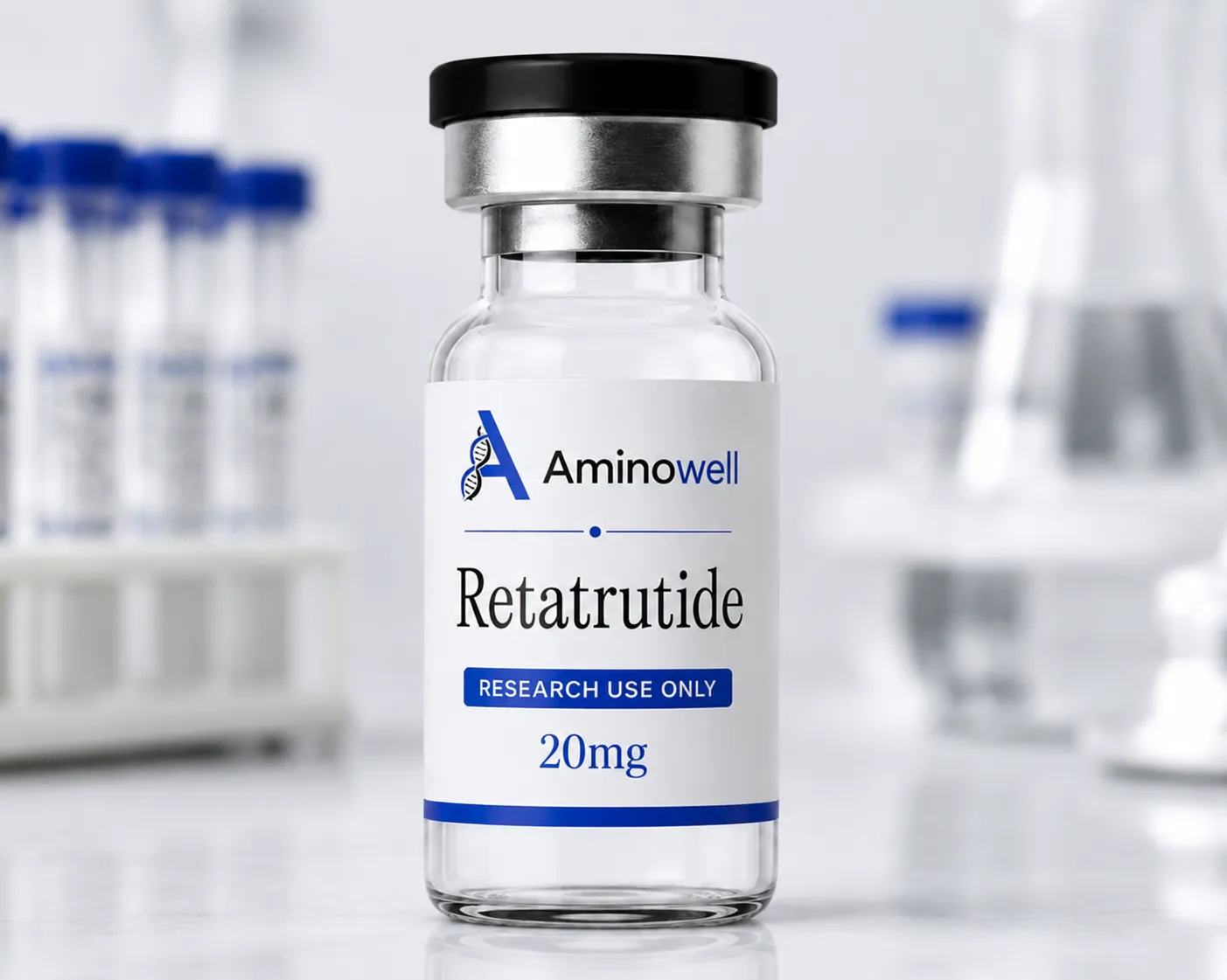

Proper storage and handling play an important role in maintaining the quality, stability, and consistency of research peptides. Since peptides are sensitive compounds, researchers should follow careful laboratory practices to help preserve product integrity throughout the research process.
At Aminowell, our peptides are intended strictly for laboratory research use. Understanding the basics of storage and handling can help research professionals work more confidently and reduce the risk of unnecessary product degradation.
Why Proper Peptide Storage Matters
Peptides can be affected by several environmental factors, including temperature, moisture, light, and repeated exposure to air. If a peptide is not stored correctly, its stability may be reduced over time. This can affect consistency and make research results less reliable.
For this reason, researchers should always review the specific storage recommendation provided with each product and follow proper laboratory standards.
General Storage Best Practices
Most research peptides should be kept in a cool, dry environment before use. Many peptides are commonly stored at low temperatures to help maintain long-term stability. Moisture exposure should also be avoided, as it may affect the quality of the compound.
It is also a good practice to keep peptide containers tightly sealed when not in use. This helps reduce exposure to air and environmental contaminants.
Handling Peptides in the Lab
When handling peptides, researchers should use clean laboratory tools and follow standard safety procedures. Gloves, clean surfaces, and controlled handling environments are important for reducing contamination risk.
Peptides should be handled carefully and only opened when necessary. Repeated opening and closing of containers may expose the product to moisture and air, which can impact stability over time.
Labeling and Documentation
Clear labeling is an important part of research peptide management. Each product should be labeled with the product name, batch information, storage date, and any internal lab notes. This helps researchers keep track of product use and maintain organized research records.
Good documentation also supports consistency across experiments and makes it easier to review product history when needed.